

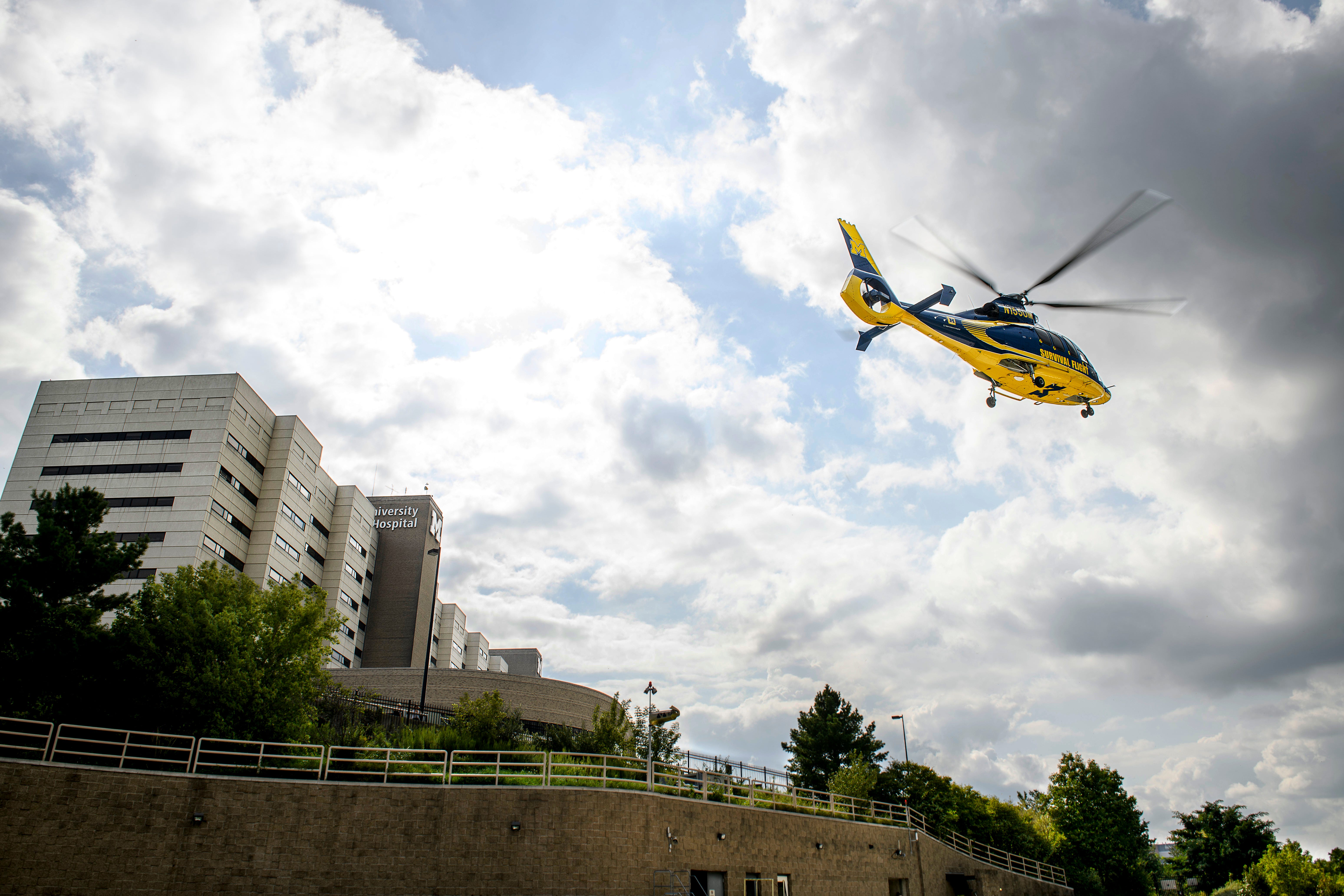
(LANSING) - A new report from Bridge Michigan says rural Michigan hospitals may become increasingly dependent on medical helicopters for emergency patient transfers as financial and policy pressures continue affecting health care systems across the state.
The report says rural hospitals are expected to scale back high-cost and low-volume services including maternity care and inpatient psychiatric treatment as funding tightens. Health care leaders say that could lead to more emergency transfers to larger medical centers in cities including Ann Arbor and Grand Rapids.
According to federal data cited by Bridge Michigan, Michigan air ambulance providers transported an average of 3,300 patients per year between 2021 and 2023, with more than 80 percent involving transfers from rural hospitals.
The report says medical helicopters are commonly used for stroke and cardiac emergencies, severe trauma injuries, and cases where rural hospitals do not have needed specialists or equipment.
Bridge Michigan reports the average cost of a medical helicopter flight is about $40,000, with some longer flights reaching $100,000.
The report also says air ambulance providers are facing financial pressure linked to the federal No Surprises Act, a 2022 law that protects patients from unexpected emergency air transport bills. Providers say the law can lead to long reimbursement delays through a federal arbitration process when insurers and providers disagree on payments.
Bridge Michigan also reports concerns surrounding federal Medicaid reductions tied to legislation referred to in the report as the "One Big Beautiful Act." Experts cited in the story say the cuts could cost Michigan hospitals up to $6 billion over the next decade, with rural facilities expected to face the greatest impact.
A separate analysis cited in the report suggests 15 Michigan hospitals could reduce services, nine hospitals are at risk of closure, and three face immediate closure risk.
The report says rural ambulance systems are already strained in some areas because of staffing shortages and limited equipment availability.
Bridge Michigan says health care leaders are discussing several possible solutions, including faster reimbursement processes, expanded EMT and paramedic training, and reducing regulatory burdens on ambulance providers.