

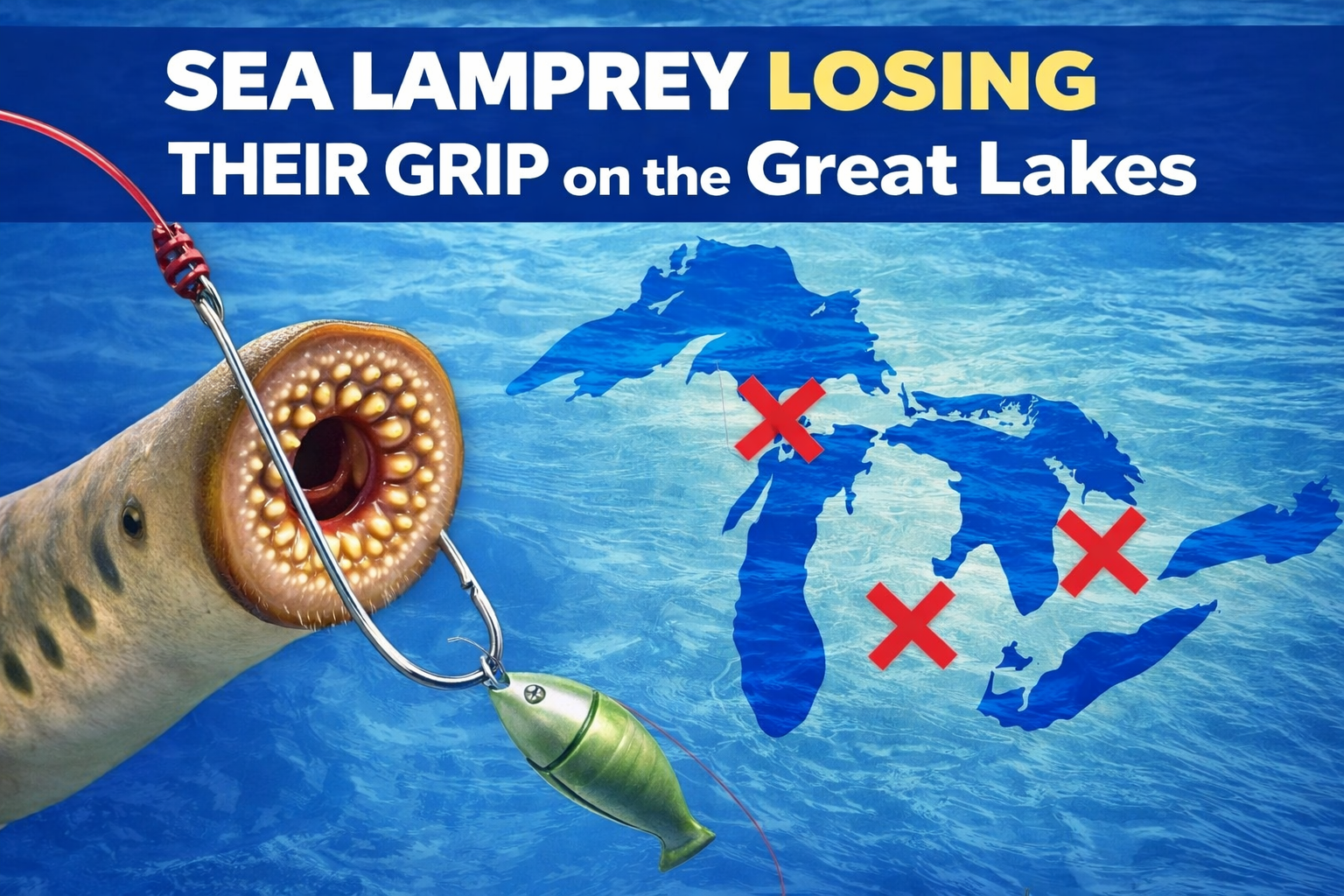
(LANSING) - Invasive sea lamprey populations in the Great Lakes are declining again after control programs resumed following pandemic-related disruptions, according to a new report from the Great Lakes Fishery Commission.
Surveys show lamprey numbers have returned to near pre-pandemic levels across most of the Great Lakes, including waters that affect Indiana, Michigan, and Ohio fisheries. During the COVID-19 pandemic, border closures and other restrictions limited treatments, allowing the invasive species to spread more widely.
Sea lamprey are considered one of the most destructive invasive species in the Great Lakes. Native to the Atlantic Ocean, they attach to fish and feed on blood and bodily fluids, often killing their hosts. A single lamprey can destroy multiple fish during its lifetime, posing a major threat to commercial and recreational fishing.
The Great Lakes Fishery Commission coordinates control efforts in partnership with agencies in the United States and Canada. Those efforts include treating streams with lampricides that target young lamprey before they reach open water, along with barriers designed to block access to spawning areas. Officials say the methods are carefully designed to avoid harming other aquatic species.
The report shows lamprey populations declined in all Great Lakes except Lake Superior. Officials say continued monitoring and treatment will be critical to protecting fisheries that support regional economies in Indiana, Michigan, and Ohio.
Commission leaders say sustained funding and international cooperation remain essential to preventing future population spikes and keeping invasive species in check.